







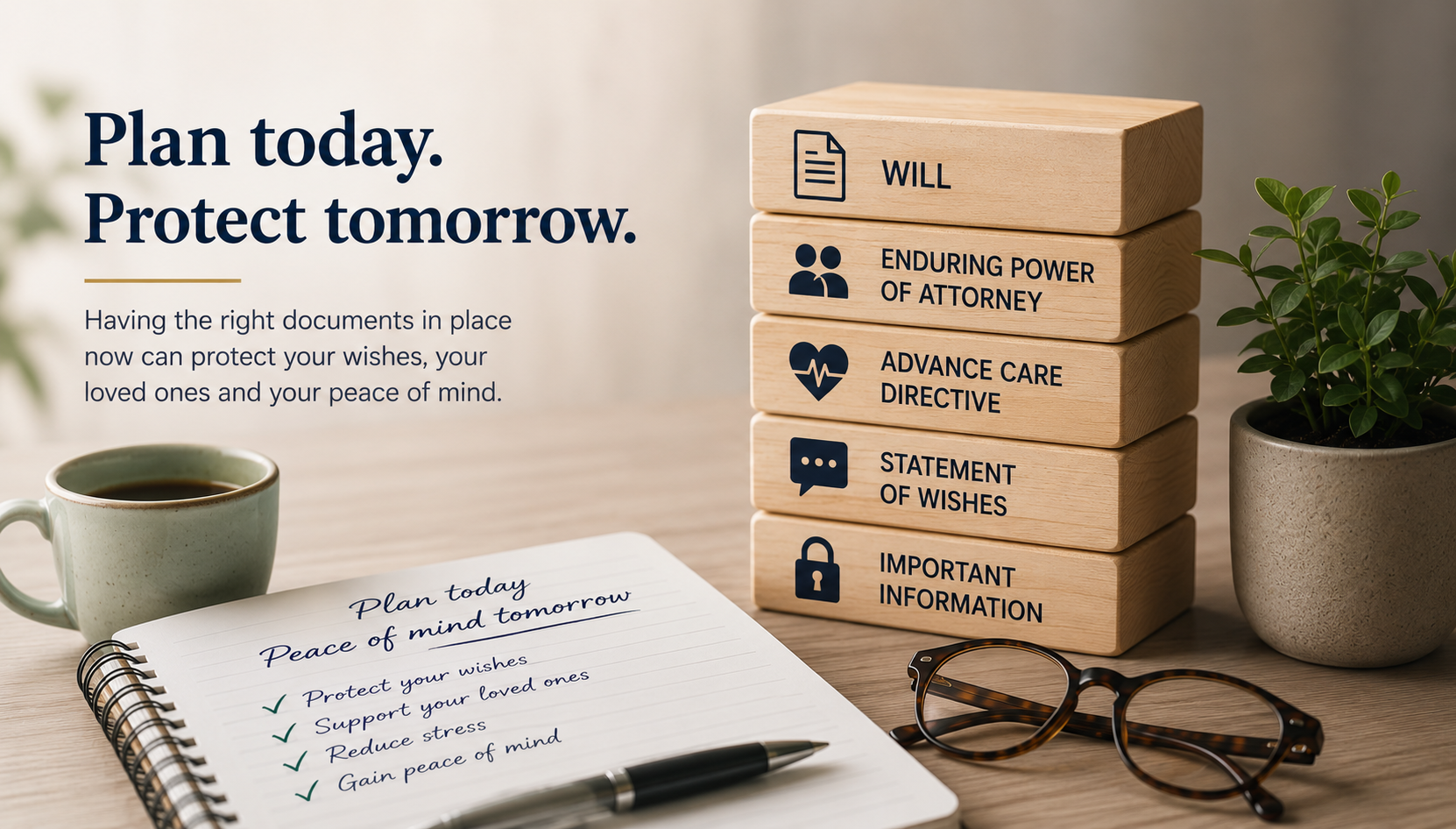
One of the most common things we see when families are considering aged care is a rush to organise paperwork during a period of stress, illness or crisis. A hospital admission, a fall, a dementia diagnosis or an urgent need for residential aged care can leave families scrambling to locate important documents and make decisions on behalf of a loved one. Before a crisis hits, Do you know the 5 documents every older Australian should have in place?
The reality is that estate planning is not just about what happens after death. It is also about ensuring your wishes can be followed if you are unable to make decisions for yourself. The best time to review these documents is while you are healthy, well and have full decision-making capacity.
Here are five essential documents every older Australian should consider reviewing before entering aged care or experiencing a loss of capacity.
1. A Current and Valid Will
Your Will determines how your assets will be distributed after your death and who will be responsible for administering your estate. Unfortunately, many people have Wills that were prepared decades ago and no longer reflect their current circumstances.
Major life events such as marriage, divorce, the death of a spouse, blended family arrangements, new grandchildren or changes in financial circumstances may mean your Will needs updating. Questions to consider include:
- Does your Will still reflect your wishes?
- Have you appointed an appropriate executor?
- Are all beneficiaries clearly identified?
- Have you considered specific gifts, family heirlooms or charitable bequests?
- Does your Will adequately address blended family situations?
A current Will can help minimise family disputes and provide clarity during an already emotional time.
2. Enduring Power of Attorney
An Enduring Power of Attorney (EPOA) allows you to appoint someone you trust to make financial and legal decisions on your behalf if you lose capacity. This document becomes particularly important in aged care situations.
Your attorney may need to:
- Manage bank accounts and investments
- Sign aged care agreements
- Sell or retain the family home
- Deal with Centrelink and government agencies
- Arrange payment of accommodation costs and care fees
Without a valid EPOA, families may need to apply to a tribunal for the appointment of a decision-maker, which can be costly, time-consuming and stressful.
Choosing the right attorney is just as important as having the document itself. Select someone who is trustworthy, organised and willing to act in your best interests.
3. Advance Care Directive
An Advance Care Directive allows you to record your healthcare wishes for a time when you may no longer be able to communicate or make decisions yourself. These instructions may include:
- Medical treatment preferences
- End-of-life care wishes
- Resuscitation preferences
- Personal values and beliefs that should guide healthcare decisions
Having these conversations early can provide enormous comfort to family members who may otherwise be forced to make difficult decisions without knowing what their loved one would have wanted.
An Advance Care Directive can help ensure your voice is heard, even when you cannot speak for yourself.
4. Statement of Wishes
While not a legal document, a Statement of Wishes can be incredibly valuable. Many aged care providers ask families about a resident’s preferences, routines, interests and personal history when they move into care.
A Statement of Wishes can include:
- Daily routines and preferences
- Religious or cultural considerations
- Family relationships
- Preferred living arrangements
- Personal values
- Funeral wishes
- Messages for loved ones
This document can help care providers deliver more personalised support while also giving family members guidance during difficult times.
5. A Record of Important Information
Families are often surprised by how much information is needed when a loved one enters aged care. Consider maintaining a simple document that records:
- Bank accounts and investments
- Superannuation details
- Insurance policies
- Pension and Centrelink information
- Contact details for advisers and professionals
- Location of legal documents
- Digital accounts and passwords (stored securely)
Having this information readily available can significantly reduce stress during a health event or aged care transition.
Planning Ahead Brings Peace of Mind
No one likes to think about losing capacity or needing aged care. However, having the right documents in place before a crisis occurs can save families considerable stress, expense and conflict. If you haven’t reviewed or planned for the 5 documents older Australians should have in place, please reach out to your Solicitor now to assist.
At Trusted Aged Care Services, we regularly see the difference that good planning makes. Families who have these conversations early are often better prepared to navigate aged care decisions with confidence and clarity.
If you haven’t reviewed your estate planning documents in recent years, now may be the perfect time to start the conversation. Because the best decisions are usually made before they’re needed.